Travel tips
Australia Travel Checklist: What to Pack and Prepare Before You Go
Get ready for an Australian trip with a practical checklist covering documents, clothing, useful items, arrival declarations and driving reminders.
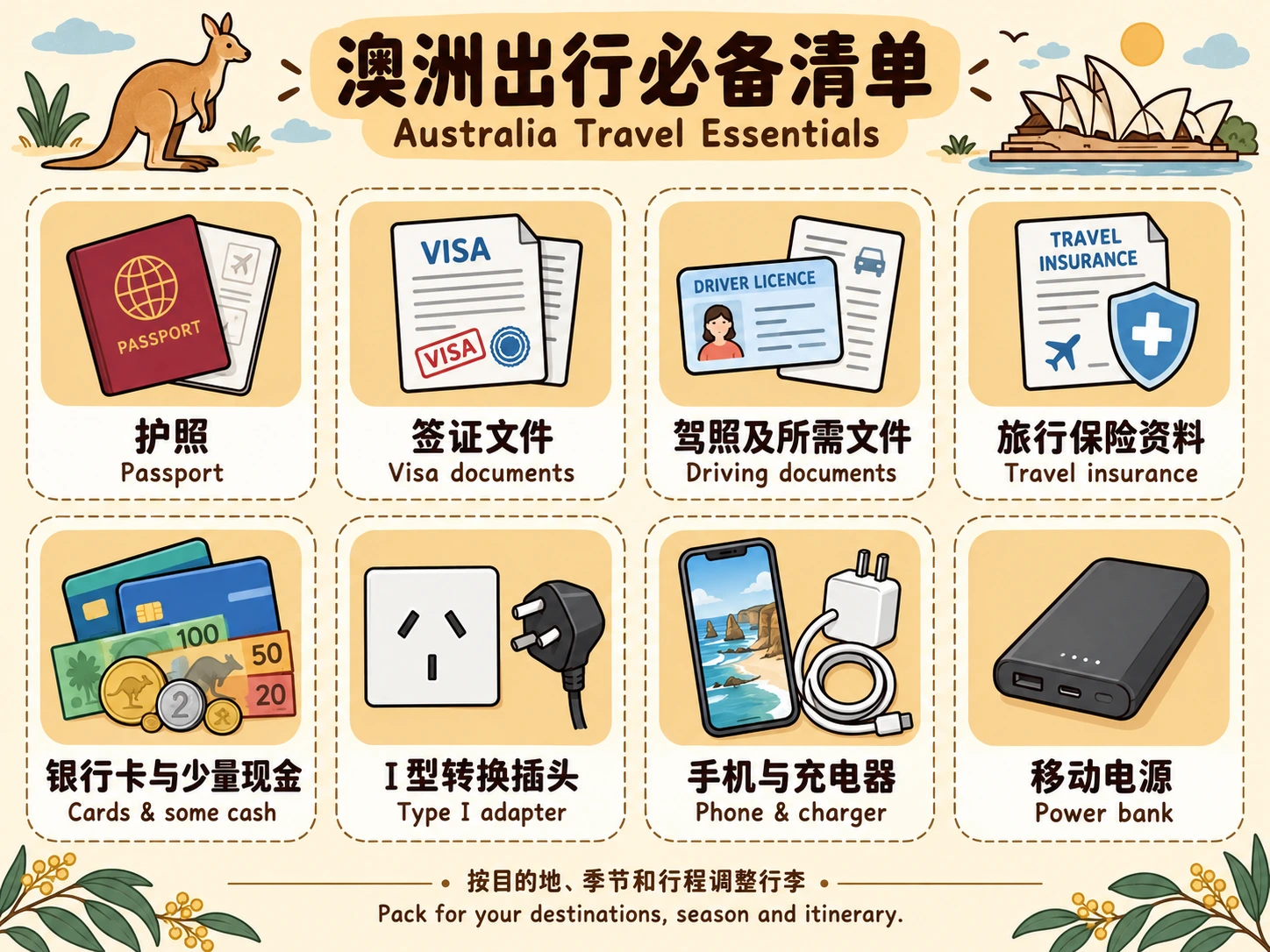
Before you go: match your plans to the season
Australia is a large country with varied climates, so packing for one city may not suit another. May is autumn in southern Australia; July and August are winter. Tropical northern regions have different wet and dry seasons, so check local climate information and the forecast for your destinations before packing. Conditions vary by place and year. (bom.gov.au)
If your itinerary includes Sydney, Melbourne or other southern destinations in winter, bring layers and a warm outer layer. For northern destinations such as Cairns, choose lightweight clothing and check conditions for your travel dates. A waterproof layer and comfortable walking shoes can be useful in many itineraries.
Australia packing checklist
Documents and essentials
- Passport and visa: Check that your passport is valid and that you hold the appropriate visa for your trip. Keep accessible copies of important documents as a backup.
- Driving documents: If you plan to drive, bring your valid licence and check the relevant state or territory requirements and rental company conditions in advance. If you need a translation, confirm what form is accepted; a NAATI-certified translation may be useful, but do not assume it replaces other required documents.
- Power adapter: Australia uses Type I sockets. Check whether your devices need a compatible travel adapter, especially if their plugs are not Type I. Confirm the voltage requirements printed on each device or charger.
- Sun protection: Pack sunscreen, sunglasses and a hat. Consider lightweight long sleeves for time outdoors.
- Personal medicines: Keep medicines in their original packaging where practical, and carry relevant prescriptions or supporting documents. Check Australian import conditions before travelling and answer declaration questions accurately.
- Everyday items: A reusable water bottle, phone charger, power bank, travel insurance details and a small day bag can make outings easier.
Clothing by itinerary
Pack for your actual route rather than assuming the whole country has the same weather. Include layers for changeable conditions, comfortable shoes for walking and clothing suited to any planned outdoor or water activities. Check the forecast shortly before departure and adjust your luggage accordingly.
Arrival and biosecurity declarations
International arrivals need a valid passport or travel document, and arriving passengers are required to complete an Incoming Passenger Card. Follow the instructions provided during your journey or at the airport, and answer every question truthfully. (abf.gov.au)
Australia has strict biosecurity controls. Certain food, plant material, animal products and other risk goods must be declared for inspection; whether an item can enter depends on the applicable conditions. If you are unsure, declare it and let a biosecurity officer assess it. Do not take food served on the aircraft off the plane. Check the official guidance before packing food, medicines or items made from animal or plant materials. (agriculture.gov.au)
If you carry AUD 10,000 or more in cash, or the equivalent in foreign currency, check the current declaration requirements. This is a declaration requirement, not a limit on how much currency you may carry. (abf.gov.au)
Useful tools to prepare
- Save accommodation details, travel insurance information and important booking references offline.
- Download maps or translation resources for use when mobile reception is limited.
- Check official visitor, weather, road and biosecurity information for the places on your itinerary.
- Keep copies of your passport, visa and driving documents separate from the originals.
Driving reminders
Driving rules and toll arrangements vary by state, so check the rules and rental terms for the places where you will drive.
- Melbourne hook turns: At intersections displaying a hook-turn sign, drivers make a right turn from the left lane by following the signs and road markings. Review the official instructions before driving in central Melbourne. (transport.vic.gov.au)
- Fuel: Check the fuel type specified for your rental vehicle before filling up. Do not rely on a general rule about what most rental cars use; using the wrong fuel can cause serious problems.
- Toll roads: Ask the rental company how tolls are handled, whether the vehicle has a tolling arrangement and what fees or payment steps apply. Do not assume every road has a staffed toll booth or that one payment deadline applies across Australia.
- Before setting off: Confirm your route, parking arrangements and local road rules. Allow time to get familiar with driving on the left.
A final pre-departure check
- Passport, visa and booking details are ready.
- Clothing suits each destination and the latest forecast.
- Medicines and food items have been checked against Australian entry guidance.
- Phone, charger and suitable power adapter are packed.
- If driving, licence documents, rental conditions, fuel type and toll arrangements are confirmed.
A little preparation helps you avoid common surprises while leaving room to adapt your plans to local conditions.