


Melbourne · Nature
Cranbourne Gardens: Red Sand and Australian Plants
In Melbourne’s south-east, Cranbourne Gardens’ Australian Garden pairs a striking red-sand landscape with displays of native Australian plants. Follow the Eucalypt Walk to explore the Peppermint and Ironbark gardens, and view the Ephemeral Garden from designated spots.
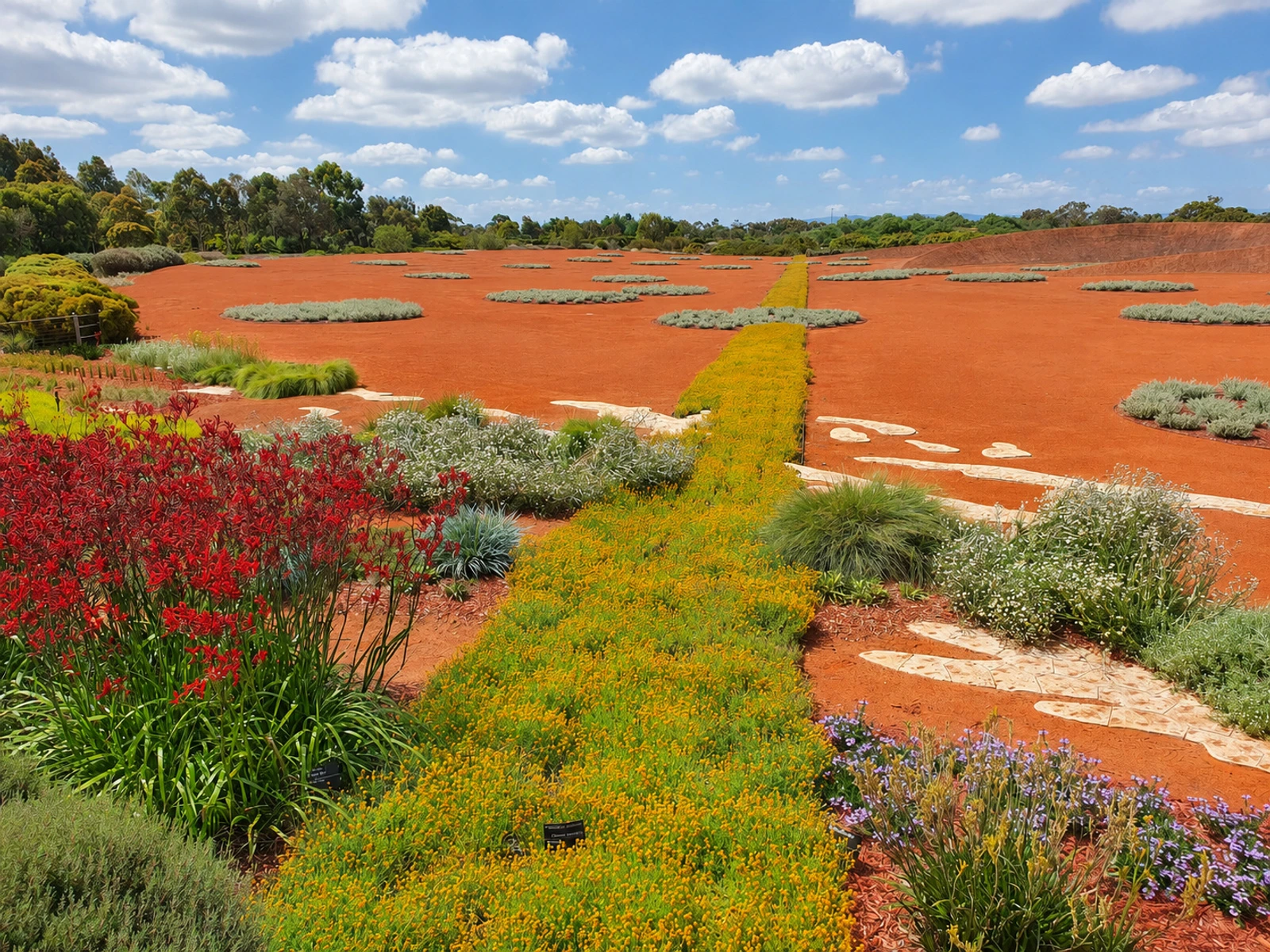
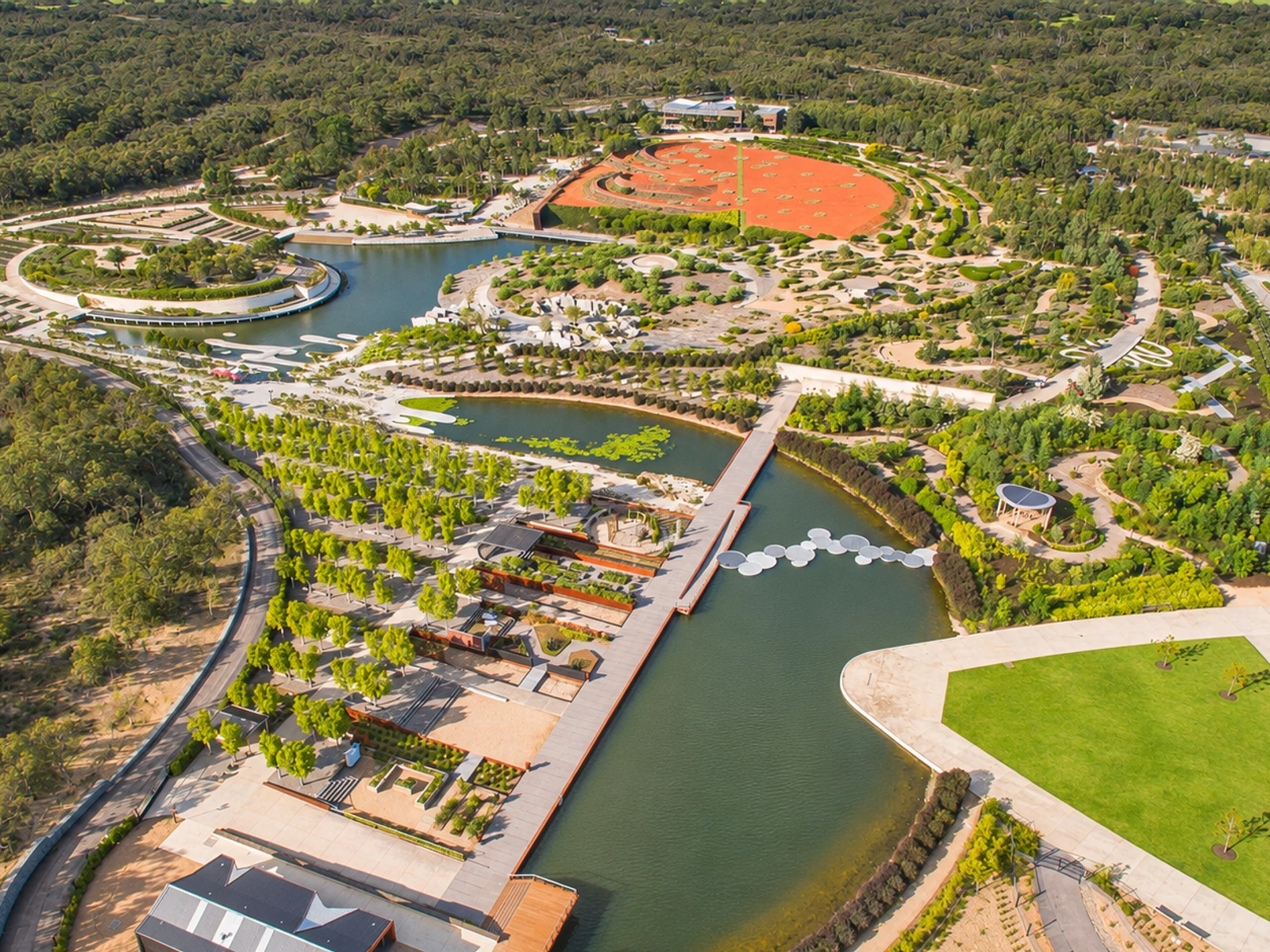
Cranbourne Gardens is a Royal Botanic Gardens Victoria site in Melbourne’s south-east, best known for its Australian Garden. The vivid Red Sand Garden is the visual centrepiece, set among paths and themed collections of Australian plants. It makes a rewarding outing for garden lovers, photographers and anyone curious about native flora; allow time to wander rather than treating it as a quick photo stop.
The Australian Garden was created on a former sand-mining site. Its red earth, sculpted landscape and planted collections bring together dramatic scenery and a closer look at plants adapted to Australian conditions.
Start with the Red Sand Garden
Begin at the Red Sand Garden viewing area and take in the broad sweep of red sand, planting and landforms. The garden’s design draws on the landscapes of Australia’s arid centre, making the contrast between red ground and surrounding vegetation a central part of the visit.
The Ephemeral Garden sits in front of the Red Sand Garden. It represents how rain can bring short-lived flowering plants to arid landscapes. It is not accessible to walk through, so view it from the Red Sand Garden viewing area or the southern end of the Dry River Bed. Flowers and foliage change with the seasons and conditions, so photographs are not a guide to what will be in bloom on your visit.
Follow the Eucalypt Walk
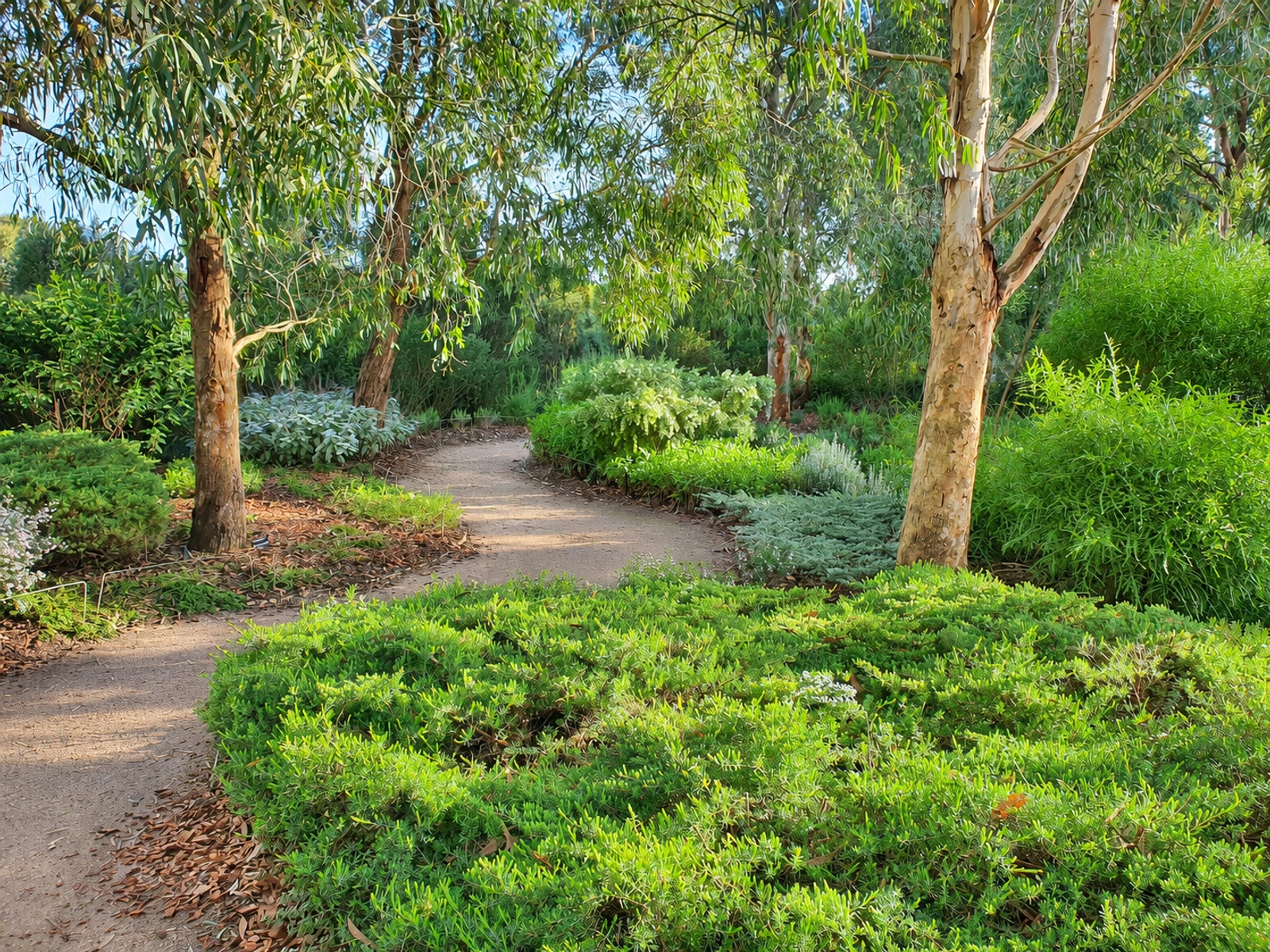
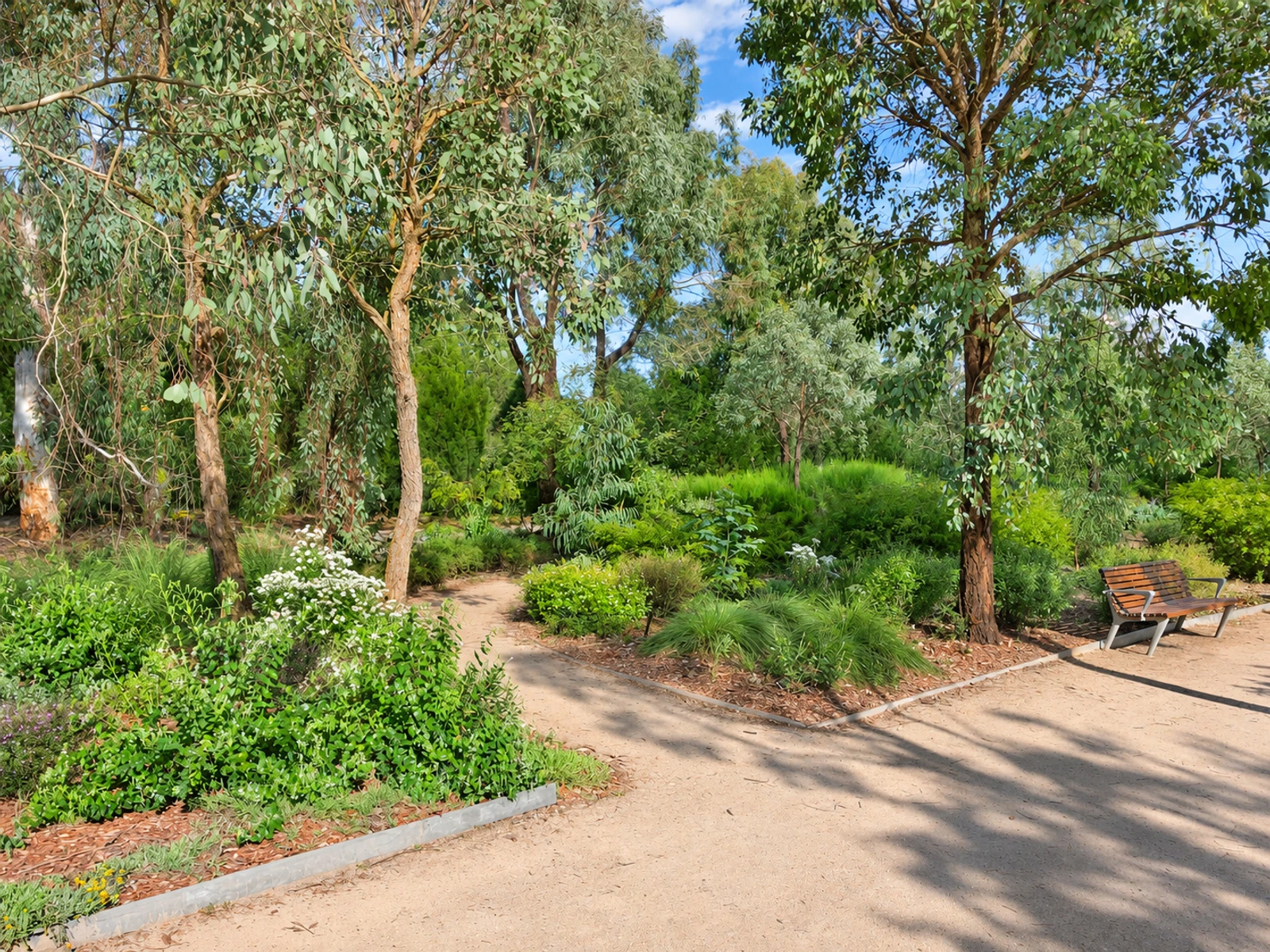
After the main viewpoint, continue along the Eucalypt Walk to explore different Australian plant communities. The Peppermint Garden lies between the Box Garden and Bloodwood Garden. Its collection features different peppermint eucalypts and other aromatic plants; how noticeable their scents are can vary with weather and time of day.
At the southern end of the walk, look for the Ironbark Garden. Its dark, deeply fissured eucalypt bark stands out against the surrounding planting, which showcases flora associated with ironbark communities. Follow the on-site signs from the main path to enter this collection.
Make the visit your own
For an easy-going visit, take in the Red Sand Garden first, then choose a section of the Eucalypt Walk that suits your time and interest. If you enjoy identifying plants, pause at the themed collections; if you are mainly here for the landscape, focus on the main viewpoint and a shorter walk. The gardens are spread out, so comfortable walking shoes and a little flexibility in your route are useful.
Cranbourne Gardens can also suit a family outing, especially for children who enjoy outdoor walks and looking for plants. Keep to public paths and viewing areas, and allow for breaks rather than trying to cover every collection. The wider gardens include bushland as well as the Australian Garden, so check the current map if you want to add more walking.
Plan your visit
Entry is free. The gardens are open daily from 9 am to 5 pm, with last entry at 4:30 pm, and are closed on Christmas Day. The entrance is at the corner of Ballarto Road and Botanic Drive, Cranbourne. Royal Botanic Gardens Victoria lists the site as about 50 km from Melbourne’s CBD; driving is the most direct option. Cranbourne Station is about 6 km away by road, and a shuttle between the station and gardens is available to request in advance, subject to the garden’s current arrangements.